
Why do bad things happen to good people? Why did the events of October 7 happen? Why would G-d allow someone I love to become sick?
These are questions that even adults struggle to answer, yet they are often asked by children trying to understand the world around them. For Jewish educators and parents, knowing how to respond can be difficult, especially when we may be asking ourselves the very same questions.
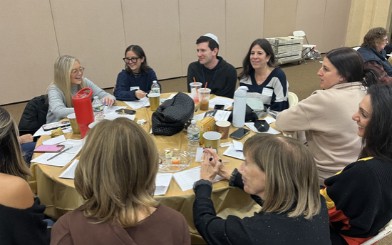
On Sunday, October 18, 2026, Jewish Federation in the Heart of New Jersey brought over 70 Hebrew school educators together at Temple Beth Shalom in Manalapan for its biannual supplemental education conference, “Bringing G-d into the Classroom,” featuring Jewish educator Sari Kopitnikoff. Through hands-on activities, guided reflection, and thoughtful discussion, Sari shared ways to help students explore their relationship with G-d and connect with Judaism in meaningful, age-appropriate ways.
As the discussion unfolded, teachers began asking how to respond when children raise difficult questions about faith and tragedy. While they were looking for answers to help their students, it felt as though they were also asking these questions for themselves, and perhaps for the children they once were. No matter how strong our faith may be, we all have moments when we struggle to understand why certain things happen. Sometimes, we wish someone could give us the answers, too.
One of Sari’s most important messages was that teachers don’t need to have all the answers. In fact, sometimes the most meaningful thing an educator can say is “I wonder about that, too” or “That’s a really hard question, and I don’t know the answer either.” Being honest about our own uncertainty reminds children that they are not alone in their questions and that questioning is a natural part of Jewish life.
Rather than feeling pressured to provide answers when there may be no clear explanation, Sari encouraged educators to approach these conversations with honesty and compassion. When a child asks, “Why does G-d let bad things happen?” a teacher could respond with, “That's a really important question, and something I wonder about, too. What made you start thinking about that?” Or, if a child asks why G-d is allowing their parent to be sick, a teacher could say, “I wish I had an answer for you. I know it must be hard to see someone you love going through this. Would you like to talk about it?” These responses may not provide the answers children are searching for, but they offer something just as important, the reassurance that their feelings matter, their questions are welcome, and they don't have to face difficult moments alone.
Sometimes, a child isn’t looking for an explanation as much as they are looking for someone to listen. By creating a safe, loving environment where every question is welcome, Jewish educators help children feel comfortable sharing their thoughts, fears, and doubts. Judaism encourages us to ask questions, even when the answers aren’t simple. Having questions doesn’t mean having less faith. Often, asking questions is how we begin to build a deeper connection to our faith.
The discussion also turned to the question of free will. One of the educators shared their approach by drawing a parallel between parents and G-d. He might say to the child, “Imagine asking your mother if you can go skateboarding, and she says no. You still have the choice to go, even though you know she doesn’t want you to. If you decide to go anyway and get hurt, who might you turn to for comfort? Most likely, your mother.”
Sari encouraged teachers to help children explore this idea by asking questions rather than simply giving an explanation. For example, “What do you think your life would look like if you did not have free will?” A child might think about not being able to choose their own friends or decide what games to play. These everyday examples make a complicated idea easier to understand while encouraging children to think about the importance of their own choices.
Throughout the conference, one message became especially clear: bringing G-d into the classroom isn’t about having every answer. It’s about making sure children feel safe enough to ask every question.
Children may not always remember exactly how a teacher answered a difficult question, but they will remember how that teacher made them feel. They will remember feeling heard, supported, and reassured that their questions mattered, even when there were no easy answers. Perhaps one of the most meaningful lessons we can teach children is that faith does not mean having all the answers. It means knowing that it is okay to wonder, to question, and sometimes even to struggle with what we believe. Just as the educators at the conference felt comfortable sharing their own questions and uncertainties, every child deserves that same sense of openness and belonging. Because sometimes, the greatest gift a teacher can give a student is not an answer, but the comfort of knowing they never have to search for one alone.